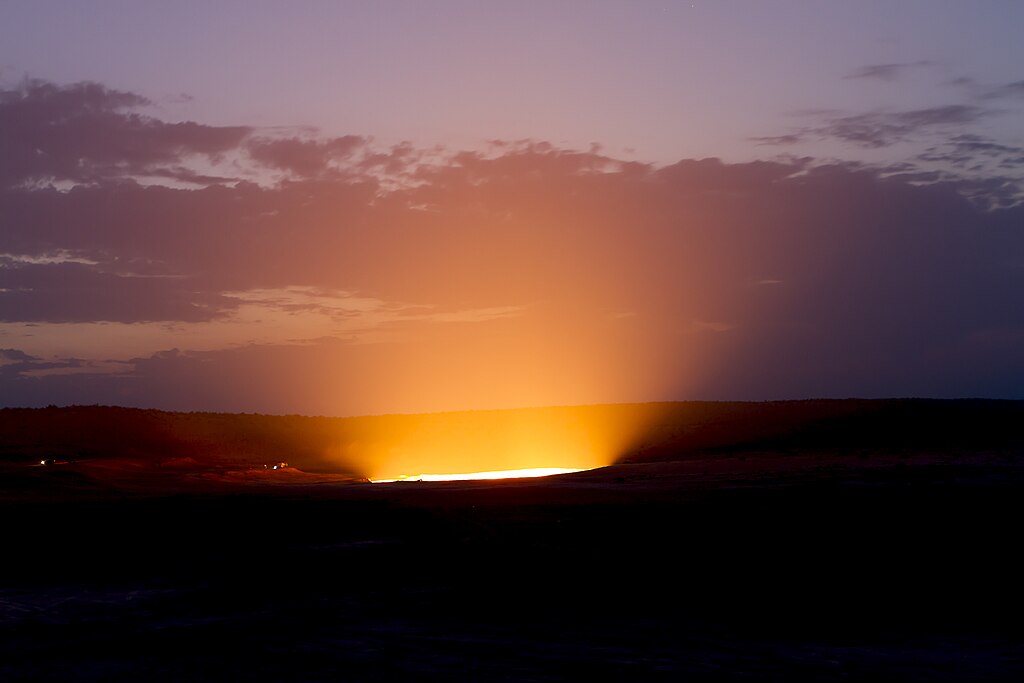
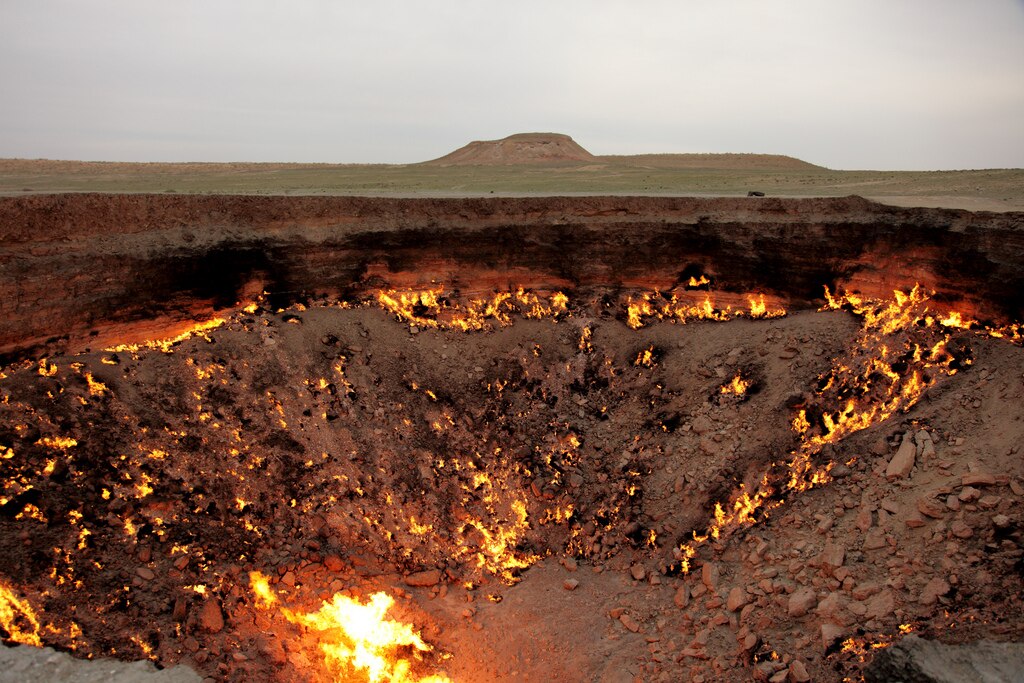
In the middle of the Karakum Desert in Turkmenistan, there is a fiery crater that has been burning for decades without stopping. It looks less like something on Earth and more like a movie set built to show the edge of the world. Known widely as the Darvaza Gas Crater, it draws travelers who stand at its rim and stare into flames that have glowed day and night since the early nineteen seventies. The setting is remote, stark, and quiet, which only makes the sight more surreal when darkness falls.
The Accidental Fire That Never Went Out
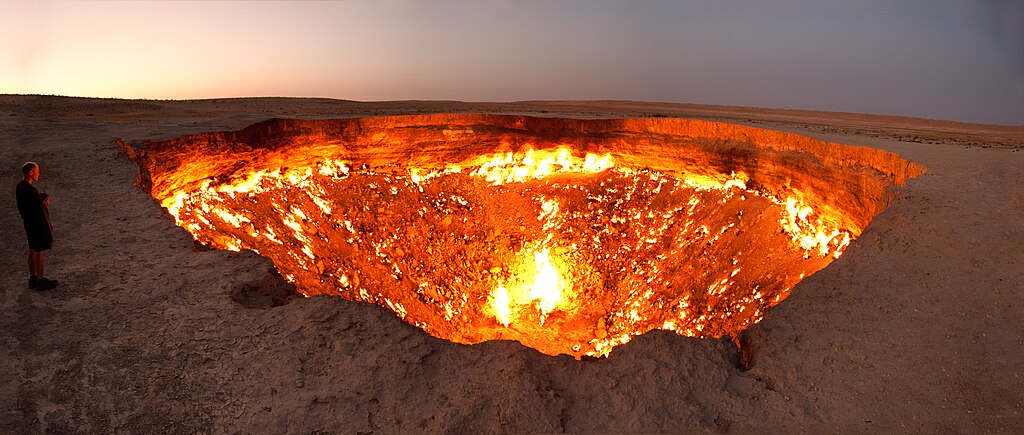
The crater began as a natural gas field that Soviet geologists were drilling in 1971. During the operation, the ground collapsed, creating a large sinkhole and releasing methane gas. Methane is highly flammable and can be dangerous if it spreads, so engineers decided to ignite it, expecting the fire to burn off in a few days. Instead, it has continued for more than fifty years. The flames persist because the underground gas supply has remained active.
This was not a planned tourist attraction and it was not designed as a spectacle. It was an industrial accident followed by a practical decision based on the knowledge available at the time. The result is a constantly burning crater about two hundred feet wide that now feels almost mythical.
Why It Looks So Unreal at Night
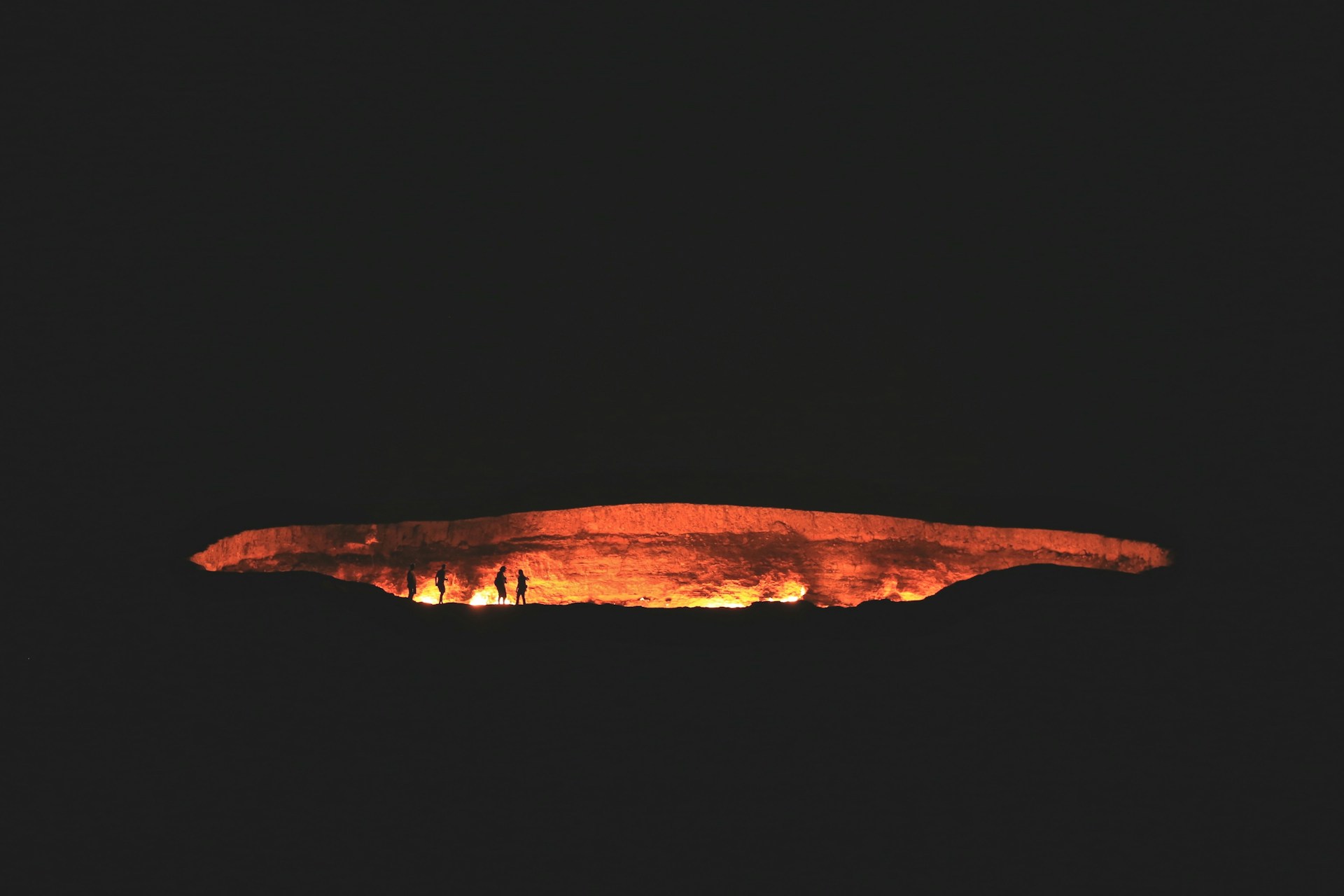
During the day, the crater appears like a massive bowl carved into the desert floor, with orange flames flickering against pale sand. After sunset, the effect changes completely. The surrounding desert turns black, and the fire casts a steady glow that lights the inside of the crater like a furnace. The contrast between darkness and flame is what creates the shock for visitors. There are no nearby city lights, no buildings, and very little noise.
The isolation intensifies the experience. It is important to understand that while photos often look enhanced, the glow itself is genuine and visible from a distance. Travelers who camp nearby often describe the steady roar of burning gas as both calming and unsettling, especially in such an empty landscape.
What Keeps It Burning After All These Years
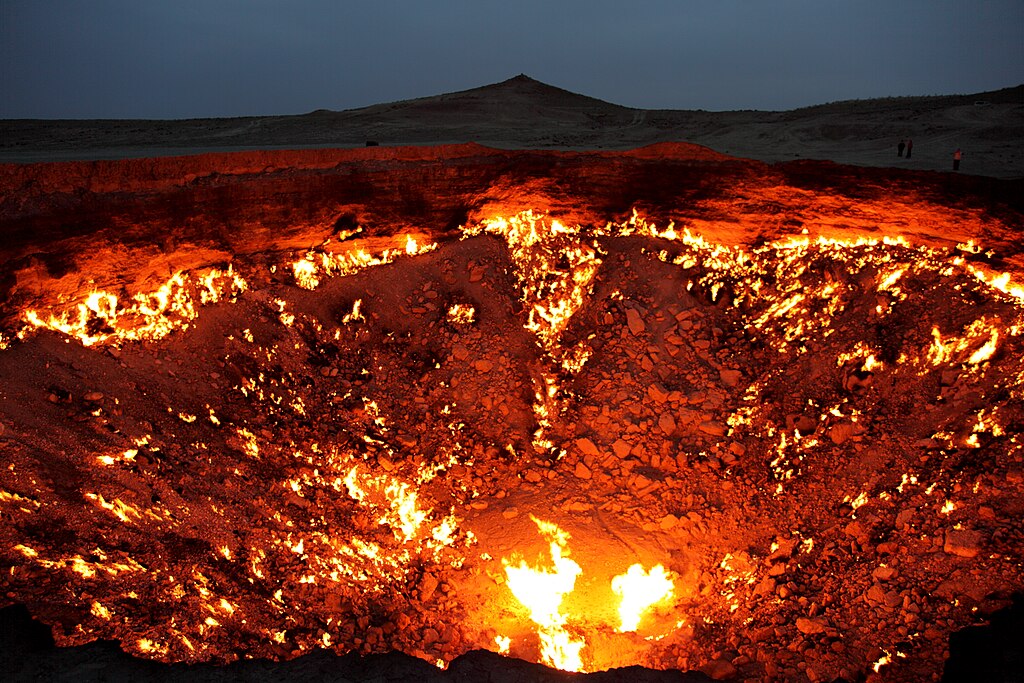
The crater continues to burn because it sits above a natural gas reserve that still feeds methane upward through porous rock. As long as gas escapes and oxygen is present, combustion can continue. There have been discussions by Turkmenistan’s government about extinguishing the fire to conserve resources and reduce environmental impact, but doing so is technically complex. This is not a bottomless pit of fire, nor is it connected to volcanic activity.
It is a gas fueled flame sustained by geological conditions. Understanding that detail helps separate fact from exaggeration. The site represents a combination of natural resource geology and human intervention. It also serves as a visible reminder of how energy exploration can create long lasting consequences that were never fully anticipated.
Why Travelers Are Drawn to Such a Harsh Landscape
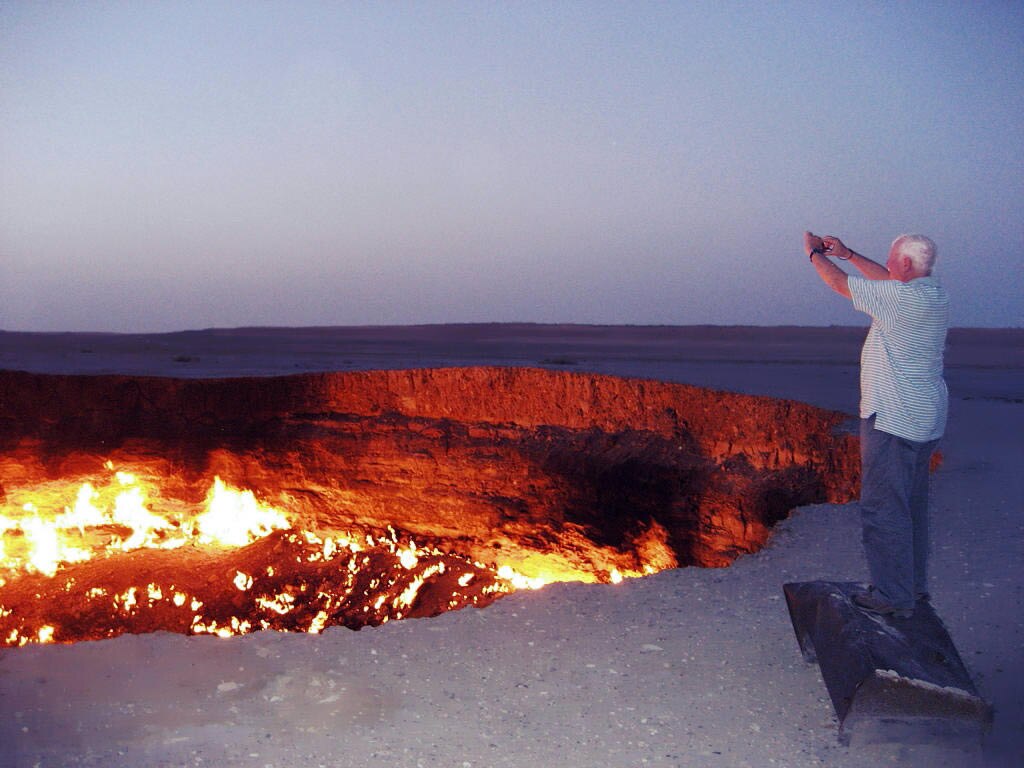
The appeal is not luxury or comfort. Reaching the crater usually requires off road travel across desert terrain, often with local guides. Accommodations are simple, and the environment is dry and exposed. Yet many visitors describe the experience as unforgettable because it feels raw and unfiltered. In a world filled with curated attractions and carefully managed spaces, standing beside a decades old fire in the open desert feels strangely honest.
It does not offer rides, fences, or dramatic narration. It simply burns. For travelers in their forties, fifties, and sixties who have seen many landmarks, the crater offers something different. It feels less commercial and more elemental. The fascination comes from witnessing something that was never meant to be permanent, yet has endured far longer than anyone expected.
The Environmental and Political Conversation Around It
Beyond the spectacle, the crater has sparked ongoing debate about energy management and environmental responsibility. Methane is a potent greenhouse gas, and burning it converts it to carbon dioxide, which is still an emission but less immediately harmful than raw methane release. Some officials in Turkmenistan have proposed closing the site to preserve gas resources and reduce environmental impact.
The discussion highlights how attitudes toward fossil fuels have evolved since the nineteen seventies. At that time, the priority was containment and safety. Today, the focus includes climate concerns and resource conservation. The crater therefore stands not only as a dramatic sight but also as a visible marker of changing energy priorities over the past half century. It continues to burn while policy conversations continue around it.