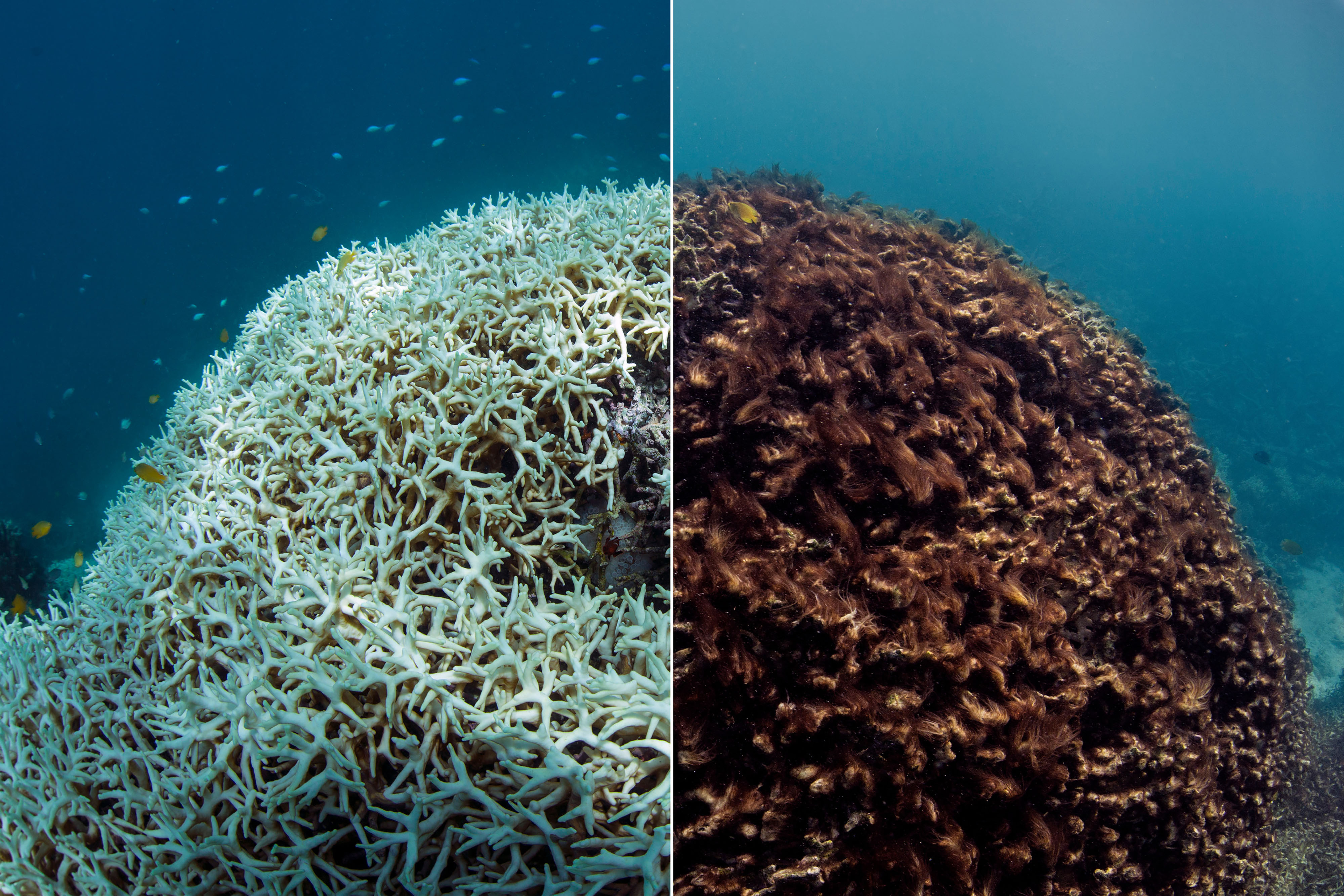
Coral reefs were once thick underwater structures built slowly over hundreds of years by tiny living animals called corals. Old photos and scientific surveys from the 1960s through the 1980s show reefs covered in colorful coral, surrounded by large schools of fish, clear water, and strong natural growth. Today, many of those same reefs are pale, broken, and covered in algae. The biggest reason is human activity. When we burn coal, oil, and gas for electricity, cars, and industry, we release gases that trap heat in the atmosphere. That extra heat warms the oceans. Warmer water stresses corals and causes them to lose the tiny algae that give them color and food, turning them white in a process called bleaching. Pollution, overfishing, and coastal construction add more stress, making it harder for reefs to survive and recover.
Maui, Hawaii
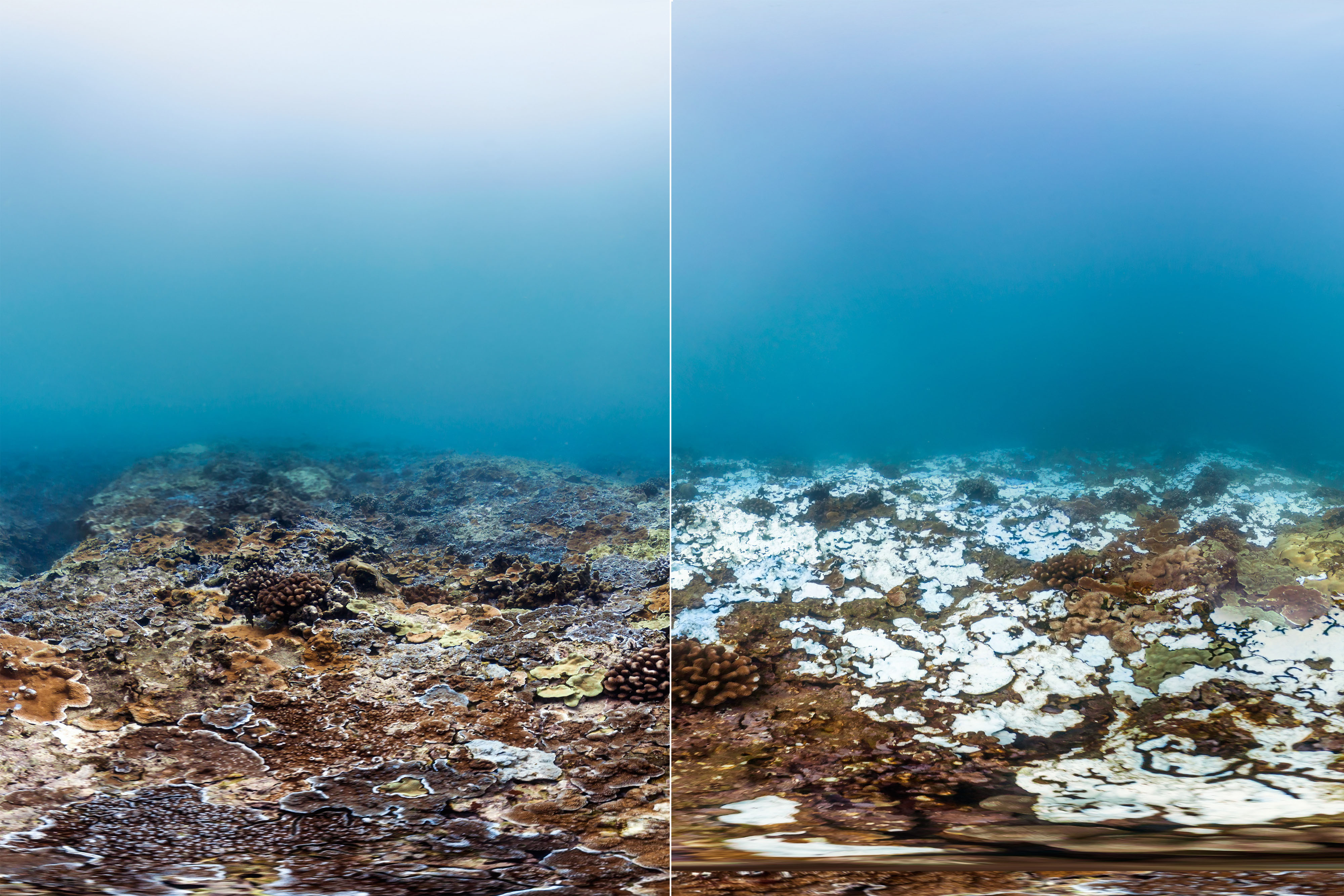
Reefs around Maui once showed strong coral growth along clear, shallow coastlines that supported fish populations and protected beaches from wave erosion. Over time, heavy coastal development, road construction, and farming increased polluted runoff flowing into the ocean, especially during storms. In 2023, severe marine heat combined with sediment runoff after major wildfires added further stress. When ocean water becomes too warm, corals lose the tiny algae that provide them food and color, turning white in a process known as bleaching. Repeated heat stress, combined with land-based pollution, has reduced coral cover in several nearshore areas. With lower greenhouse gas emissions and stronger land and runoff management, much more of Maui’s reef system would likely remain stable and productive today.
American Samoa
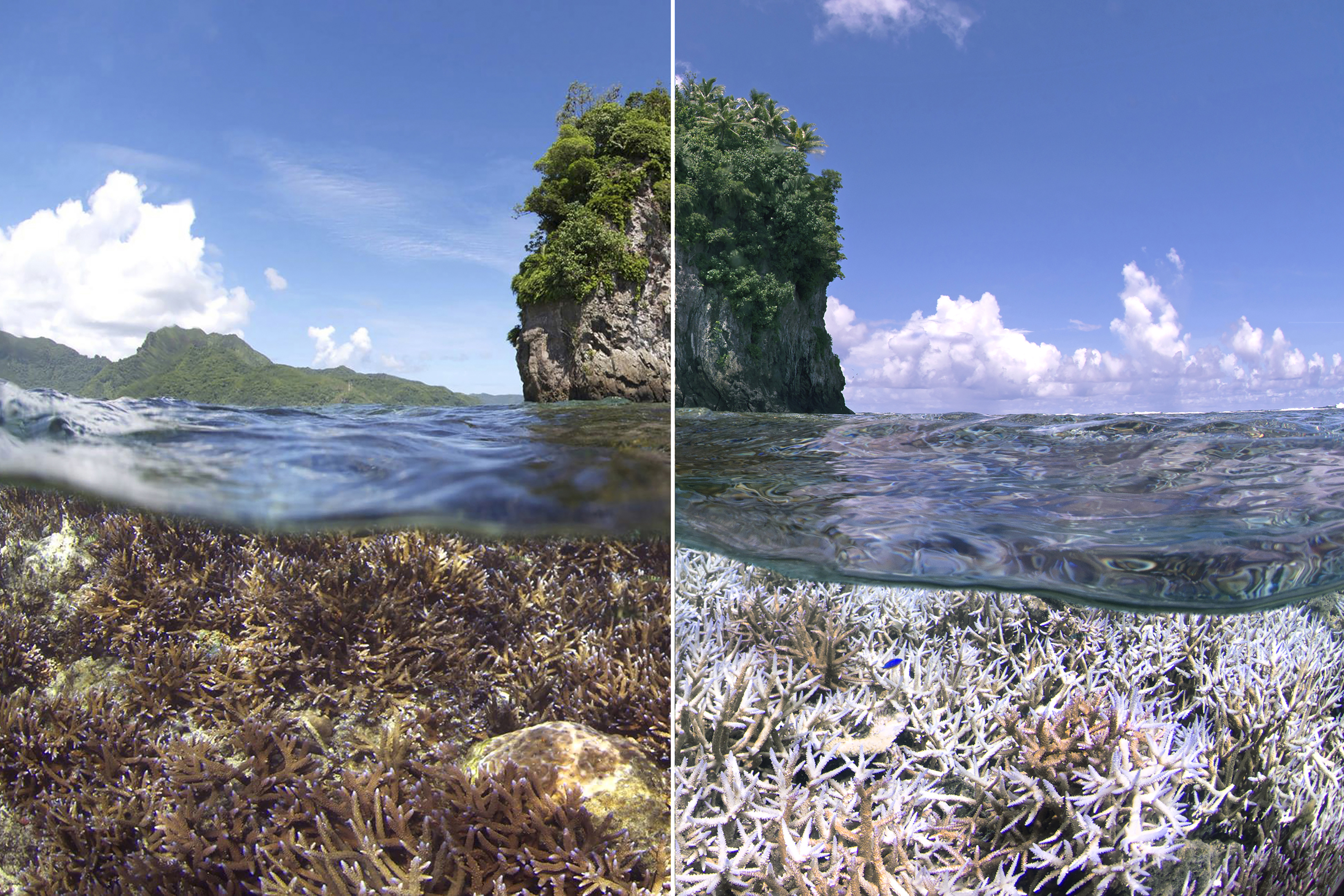
Coral reefs in American Samoa were once considered relatively healthy due to their remote location and limited coastal development. Surveys in earlier decades recorded strong coral cover and diverse reef fish communities. However, in 2014 and 2015, unusually warm ocean temperatures caused severe bleaching across much of the territory. Even without large-scale local pollution, rising global temperatures stressed corals beyond their limits. Some reefs have shown partial recovery, but repeated heat events reduce long-term resilience. The main driver is ocean warming caused by heat-trapping gases released worldwide. The decline of reefs in such remote waters shows that distance from industry does not protect coral ecosystems from global emissions, and without reductions in carbon pollution, future bleaching remains likely.
Great Barrier Reef, Australia
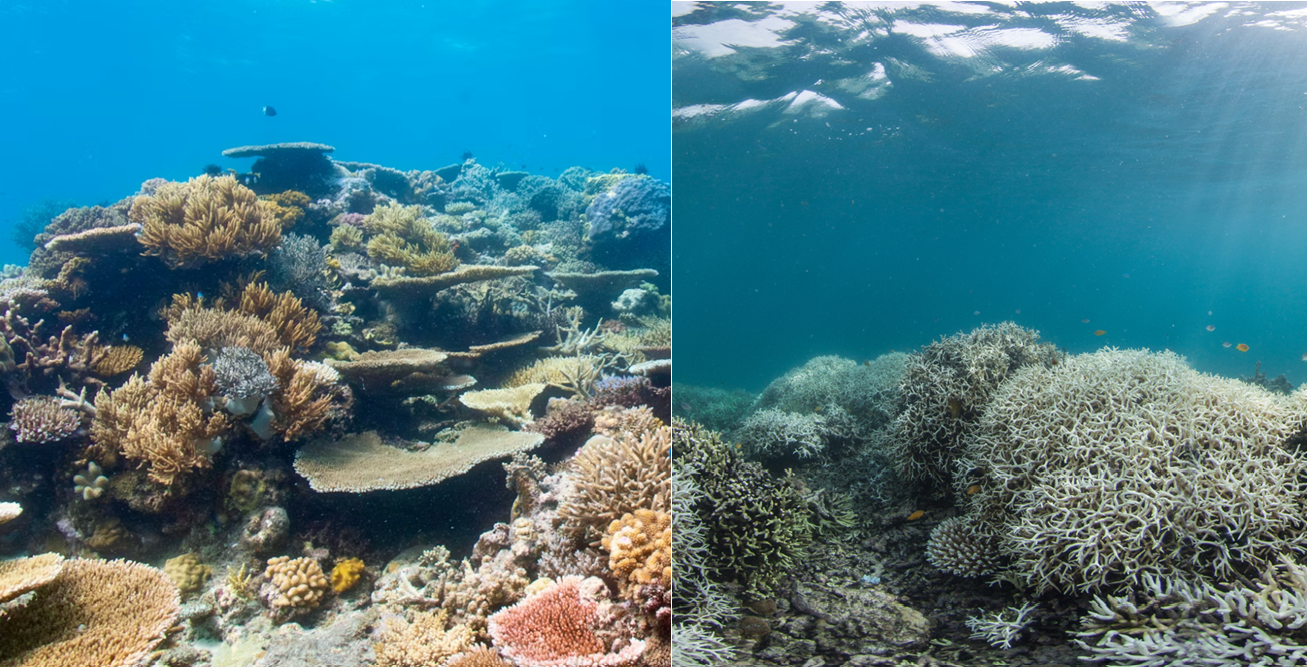
Decades ago, large areas of the Great Barrier Reef were covered with thick coral growth and supported thousands of species of fish and marine life. Surveys often recorded coral covering more than half of the sea floor in many sections. Since 1998, the reef has experienced several large heat events. When ocean water becomes too warm for too long, corals push out the tiny algae that live inside them and provide most of their energy. Without these algae, corals turn white and can starve. This has happened repeatedly in 2016, 2017, 2020, and 2022, killing large sections. The main cause is rising ocean temperature linked to heat-trapping gases released by human energy use. Runoff from farms also carries fertilizers into the sea, lowering water quality. With lower global warming and cleaner coastal water, much more of this reef would likely still be alive today.
Florida Keys Reef Tract, United States
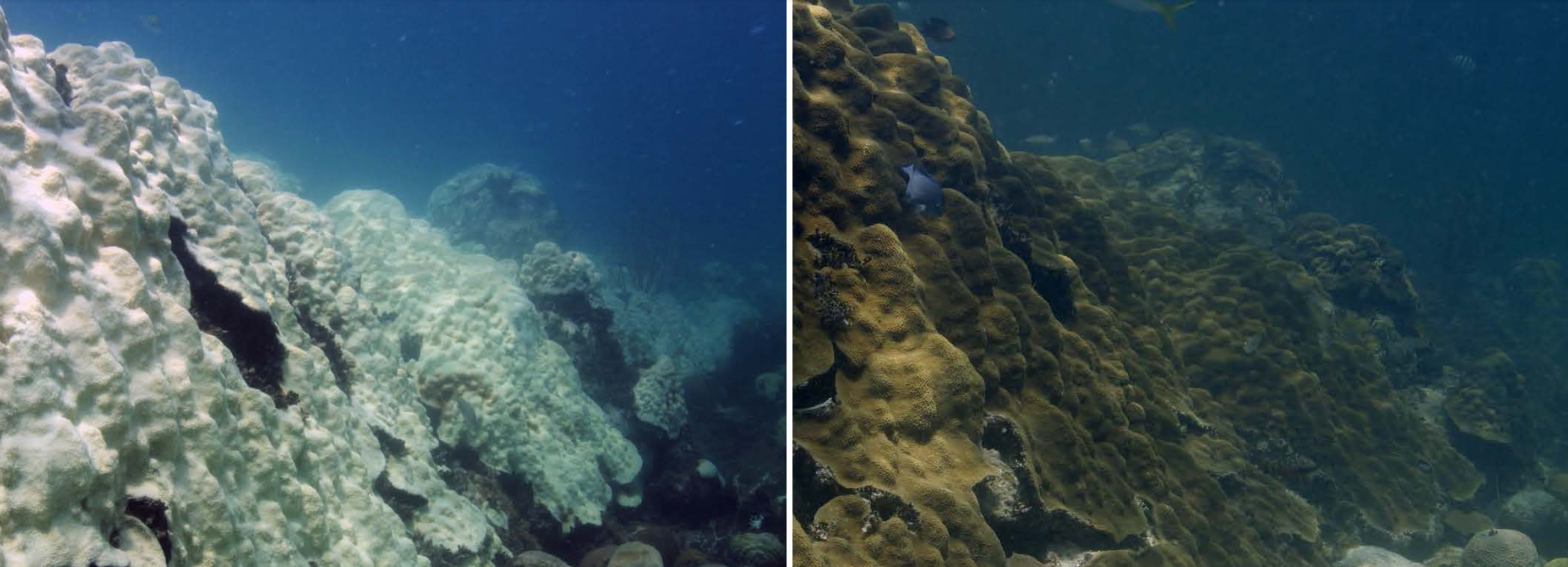
In the 1970s, parts of the Florida Keys reef had strong coral growth, clear water, and healthy fish populations. Large branching corals created complex habitats that protected shorelines and supported fishing and tourism. Over time, heavy coastal development, sewage discharge in earlier decades, and fertilizer runoff weakened the reef. Overfishing removed important fish that help control algae growth. In recent years, extreme ocean heat has caused severe bleaching, and a fast-spreading coral disease has killed major reef-building species. When water temperatures reached record highs, large areas suffered sudden losses. If greenhouse gas pollution had been reduced earlier and coastal waste better controlled, this reef system would likely show far higher coral survival and recovery today.
Maldives Coral Reefs
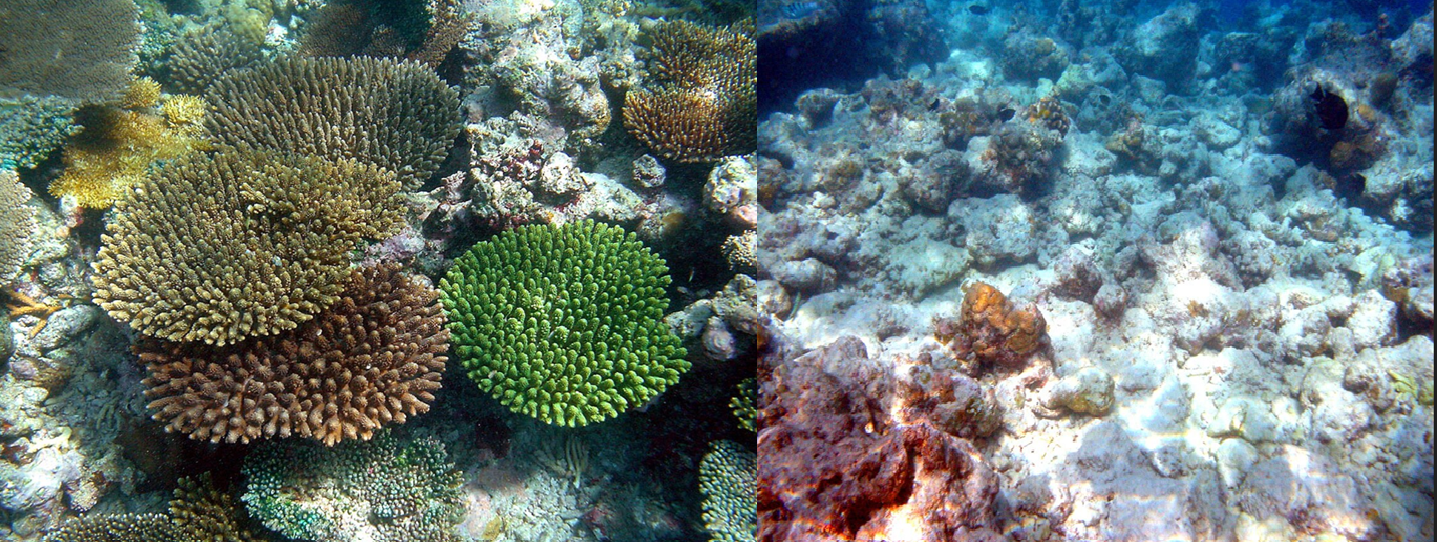
The reefs around the Maldives were once known for bright coral cover in shallow, clear water. Before the late 1990s, many atolls showed wide areas of living coral. In 1998, unusually warm ocean temperatures caused a global bleaching event that killed large amounts of coral. Later heatwaves repeated the damage, slowing recovery. Tourism growth led to dredging and coastal building, which increased sediment in the water and physically disturbed reef areas. Warm water remains the biggest threat because corals cannot tolerate long periods of high temperature. If global heating had been limited and coastal construction carefully managed, coral death during heat events would have been far lower and regrowth more stable.