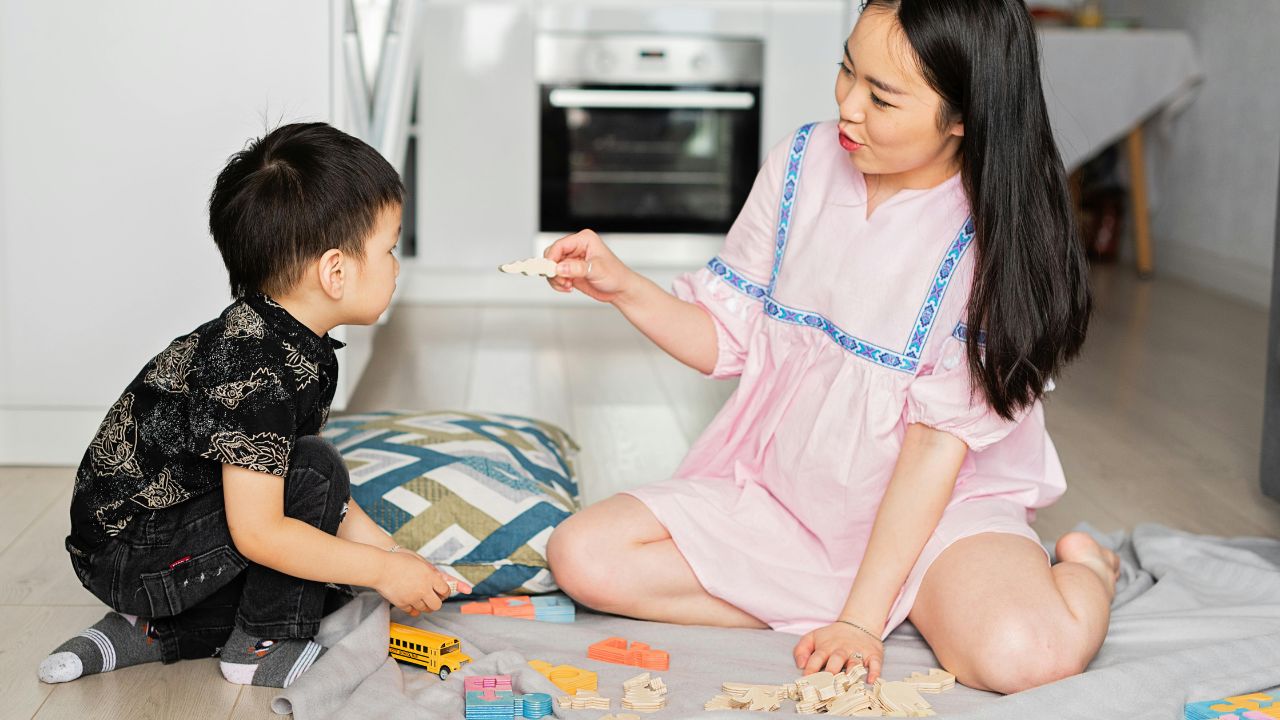
Some parenting advice looks almost too simple to fail. That was exactly why I tried it.
The experiment sounded gentle, smart, and slightly irresistible

The idea had been making the rounds for months: spend a set amount of uninterrupted, child-led time with your kid every day and watch behavior improve. No correcting, no multitasking, no slipping in lessons, and no checking your phone. Just full attention, usually for 10 to 15 minutes, with the child choosing the activity and the adult following along.
On paper, it sounded like a cleaner version of advice child development experts have given for years. The American Academy of Pediatrics has long emphasized responsive, engaged interaction as a foundation for emotional regulation and secure attachment. A 2024 study on parent-child play also found that consistent, focused attention can lower family stress and improve cooperation, especially in younger children.
What made this version viral was the promise. Parents online framed it almost like a reset button: do this for a week and the whining, stalling, and power struggles ease up. As someone who knows how social media can flatten nuanced research into neat little hacks, I was skeptical. Still, the core principle was solid enough that I decided to try it exactly as described.
I set one rule for myself: no half-doing it. If I was going to test whether this experiment changed my child’s behavior, I needed to first face a more awkward question: what happens when a child gets the kind of undivided attention most adults claim to value, but rarely deliver cleanly?
It became clear almost immediately that the hard part was me
The first session lasted 12 minutes, and I felt restless by minute three. My child wanted to line up toy animals, assign each one a family role, then dramatically reshuffle them because one zebra was, apparently, not listening. There was no productivity hidden inside the game, no educational angle, and no cute milestone to document. It was repetitive, slow, and entirely on my child’s terms.
That was the point, of course, and it exposed me fast. I noticed how often I wanted to steer the play toward something more efficient or more meaningful by adult standards. I wanted to ask leading questions, fix the storyline, and praise the “good” choices. Child psychologists often warn that adults can turn play into performance without realizing it, replacing connection with subtle control.
The discomfort sharpened when I realized how often I usually divide my attention. Even when I think I am present, I am often narrating dinner in my head, scanning for messages, or mentally moving to the next task. According to Common Sense Media surveys, both parents and children report feeling that devices routinely interrupt family interactions. The experiment didn’t create that truth. It just removed my excuses for ignoring it.
By day two, my child seemed almost suspicious. There was a look that clearly said: why are you suddenly here like this? That reaction alone told me something useful. Kids notice inconsistency faster than adults like to admit.
The surprising change was not better behavior, at least not right away

If I expected a quick transformation, the third day cured me of it. My child became more demanding outside the designated play window, not less. There was more interrupting, more clinginess, and a noticeable increase in requests for help with things usually handled independently. For a moment, I wondered whether I had accidentally reinforced neediness instead of security.
Development specialists would say that this is not unusual. When children get a concentrated dose of connection, they sometimes test whether it is real, repeatable, and safe. Teachers often see a similar pattern after school breaks or family disruptions: behavior gets bumpier before it settles. The child is not manipulating the adult so much as checking the reliability of the relationship.
That perspective helped, but it did not make the evenings easier. There is a special kind of frustration in trying a highly praised parenting technique and watching your house get louder before it gets calmer. Viral posts rarely mention that emotional adjustments can look messy in real time, especially if a child has learned to compete with work, chores, or screens for parental attention.
Then something small shifted. The tantrums did not vanish, but transitions became less explosive. Bedtime resistance softened. My child started saying, “Can we do our time later?” instead of acting out when I was busy. That was not a miracle cure. It was a sign that predictability, more than intensity, was doing the heavy lifting.
What the experiment revealed about modern parenting pressure
The most uncomfortable part was not that I found the practice difficult. It was realizing how many parenting trends are really attempts to solve structural problems with personal optimization. Parents are stretched thin, distracted, and often trying to perform calm, connection, discipline, education, and emotional coaching all at once. A tidy ritual feels appealing because it promises relief without requiring a total life redesign.
There is real value in focused one-on-one attention. Family therapists often recommend it because it lowers competition between siblings, gives children a reliable outlet for emotional expression, and helps adults observe patterns they miss during rushed routines. But experts are usually careful not to market it as a magic lever. It works best as one part of a broader emotional climate, not a replacement for boundaries, sleep, consistency, or support.
That distinction gets lost online because certainty sells. “Do this one thing” is easier to package than “try this consistently within realistic limits, and expect mixed results before gradual gains.” Parenting influencers are not wrong that connection matters. They are wrong when they imply that enough attunement can erase every behavior challenge, regardless of temperament, stress, or family context.
In that sense, the experiment taught me less about children than about adults. We are deeply vulnerable to advice that sounds both evidence-based and effortlessly doable. The minute it feels hard, many of us assume we are failing, when the harder truth is that meaningful connection is simple, not easy.
I would do it again, but not for the reason the internet promised

By the end of the week, I had enough evidence to say the experiment “worked,” if working means my child seemed more regulated, more cooperative in a few key moments, and more willing to reconnect after conflict. But the bigger result was that I became less reactive. I was interrupting less, correcting less, and noticing more. That changed the tone of the house in ways no viral caption could fully capture.
I would also adjust the framing. This is not a behavior hack; it is a relationship practice. If parents approach it like a transaction, kids can feel that immediately. The child-led play matters, but so does the message underneath it: I can be with you without directing, grading, or rushing you toward the next thing.
That message is powerful precisely because it is rare. In a culture obsessed with efficiency, children may be among the few people who ask us to waste time well. The experiment got uncomfortable because it exposed how unnatural that can feel to adults who are always optimizing.
So yes, I would recommend trying it. Just do not expect instant gratitude, cinematic bonding, or a magically calmer child by Tuesday. Expect resistance, awkwardness, and a sharper view of your own habits. That may be the real experiment, and honestly, it is the part most worth doing.