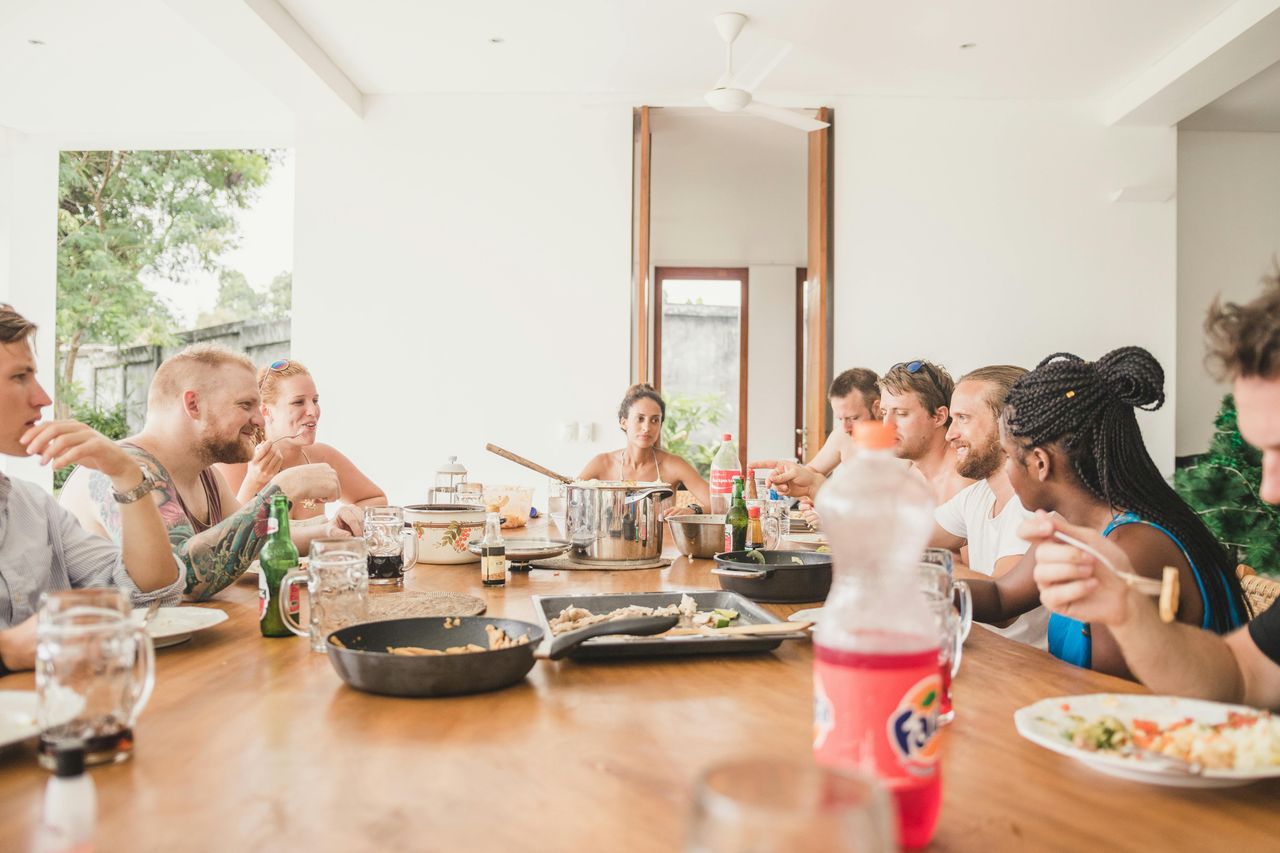
It sounds like the cure for modern loneliness. Then real life moves in.
The dream is powerful because it answers real problems

Community living appeals to people for obvious reasons: housing is expensive, isolation is common, and many families are stretched thin. The idea of sharing meals, childcare, transportation, tools, and emotional support feels both practical and deeply human. In a culture where many people barely know their neighbors, communal life offers a vision of daily belonging.
That promise is not imaginary. Research on social connection has repeatedly found that strong interpersonal ties are linked to better mental and physical health. A 2024 study on loneliness trends showed that many adults still report weak community attachment, especially in urban areas where density does not always translate into intimacy. In that context, the appeal of shared living is easy to understand.
Intentional communities, co-housing projects, eco-villages, and multigenerational households all build on the same hope: life gets easier when people stop trying to do everything alone. Residents often imagine lower expenses, more help with children and elders, stronger resilience during crises, and a richer daily rhythm. On paper, it looks like a smart response to both economic pressure and social fragmentation.
The problem is that ideals are easy to agree on from a distance. Living them hour by hour is something else entirely. The gap between the vision and the lived experience is where many departures begin.
Daily friction wears people down faster than big philosophical disagreements
Most people do not leave community living because they suddenly reject cooperation. They leave because ordinary life becomes exhausting. Dirty kitchens, noise at night, vague chore systems, unpaid shared bills, and constant interruptions can create a low-grade stress that never fully lets up. In many communities, conflict comes less from dramatic crises than from the thousand tiny negotiations required every week.
One common pattern is uneven labor. Some residents naturally take initiative, planning meals, cleaning common spaces, mediating arguments, organizing calendars, and checking on vulnerable members. Others participate less, whether because they are busy, avoidant, disorganized, or simply accustomed to someone else picking up the slack. Over time, the reliable people begin to feel used, while the less involved may feel judged or micromanaged.
Governance makes this harder. Communities that rely on consensus often do so from admirable values, but decision-making can become painfully slow. A simple question about parking, pets, guest policies, or renovation costs can spiral into hours of meetings. Experts who study co-housing often note that process fatigue is one of the least glamorous but most decisive reasons people disengage.
Then there is privacy. Many people underestimate how much solitude they need until they no longer have enough of it. Shared life can feel warm and supportive, but it can also feel like living inside an ongoing group project that never quite ends.
Community often magnifies personal patterns instead of healing them

People are sometimes drawn to communal living with the hope that a better environment will solve emotional pain, family wounds, or social disconnection. Sometimes it helps. But community can also intensify unresolved patterns, because there are simply more relationships, more expectations, and fewer places to hide. If someone struggles with boundaries, conflict avoidance, jealousy, control, or people-pleasing, those traits usually become more visible in shared life.
This is especially true in communities built around strong ideals. The language may be about equality, sustainability, mutual care, or spiritual growth, yet residents are still human. Charismatic founders can dominate decisions while claiming openness. Informal hierarchies emerge around money, seniority, education, or social influence. New members may discover that the culture is less democratic than advertised.
Psychologists who work with group dynamics often point out that proximity does not automatically create trust. Trust grows from reliability, repair, and accountability. Without those, intimacy can turn into surveillance, gossip, or moral pressure. In some communities, residents feel they must perform the “right” values at all times, which creates emotional fatigue rather than freedom.
Families with children often face another layer of strain. Shared responsibility sounds wonderful until parenting styles clash over discipline, screen time, safety, or diet. What begins as support can quickly become resentment when everyone feels entitled to an opinion.
Money, power, and life stages quietly reshape the experience
A community may begin with a shared mission, but finances eventually reveal who can stay and who cannot. Rising maintenance costs, property taxes, insurance, food budgets, and repair bills can strain even the most committed group. If one household has savings and another is barely making rent, “shared sacrifice” rarely feels equally shared. Economic inequality inside a community tends to show up in influence, comfort, and staying power.
Ownership structures matter too. In some arrangements, a small number of people legally own the property while others rent rooms or contribute labor. That can create a serious power imbalance, even when everyone talks like equals. When conflict happens, the people with legal control often have the final say. Residents who expected a cooperative model may leave once they realize the structure was never truly mutual.
Life stages also change everything. A 25-year-old may love flexible schedules, communal dinners, and spontaneous conversation. By 38, the same person may want quieter mornings, clearer routines, and space for a partner or child. Aging residents may need accessibility, medical privacy, or financial stability that the original setup cannot provide.
This is why turnover is not always a sign of failure. Sometimes people leave because their needs changed, not because the idea itself was flawed. But communities that ignore these shifts usually lose members faster.
The communities that last are less romantic and more realistic

The most durable communities tend to be the ones that give up the fantasy of effortless harmony. They create detailed agreements about chores, finances, quiet hours, guests, maintenance, childcare expectations, and conflict resolution before problems explode. What looks unromantic from the outside often feels safer on the inside. Clear structure protects relationships.
Successful groups also make room for privacy. They understand that connection is stronger when participation is not mandatory at every moment. Separate entrances, private kitchens or bathrooms, designated quiet zones, and opt-in social rituals can reduce burnout dramatically. According to housing researchers who track co-housing retention, residents are more satisfied when they can choose community rather than constantly perform it.
Another marker of healthier community living is a culture of repair. People will disappoint one another; that part is guaranteed. The key question is whether the group can address harm directly, redistribute labor fairly, and adapt when systems stop working. Communities that survive are usually very good at revising their own rules.
So why do so many people leave? Because community living is not just shared space; it is shared complexity. The concept remains attractive because the needs it addresses are real. But staying requires more than good intentions. It requires governance, humility, money, boundaries, and the maturity to accept that belonging is work.